Thursday, September 15, 2011

The New York City Police Museum

The evolution of the NYPD motorcycle.
Badges from the Brooklyn Police Department before 1898.
Old-timey mugshots.
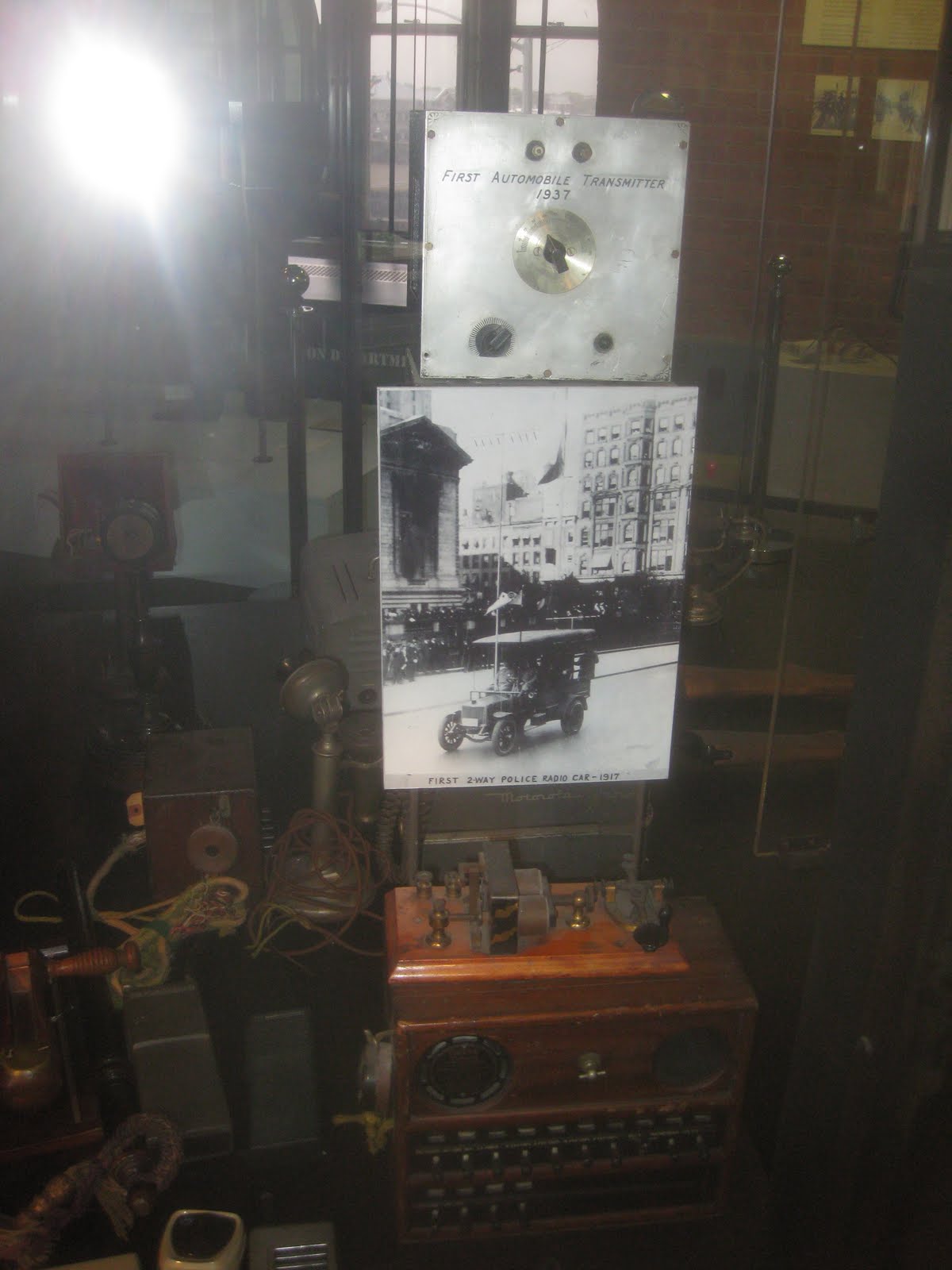
Antique radio equipment.
A typical jail cell.
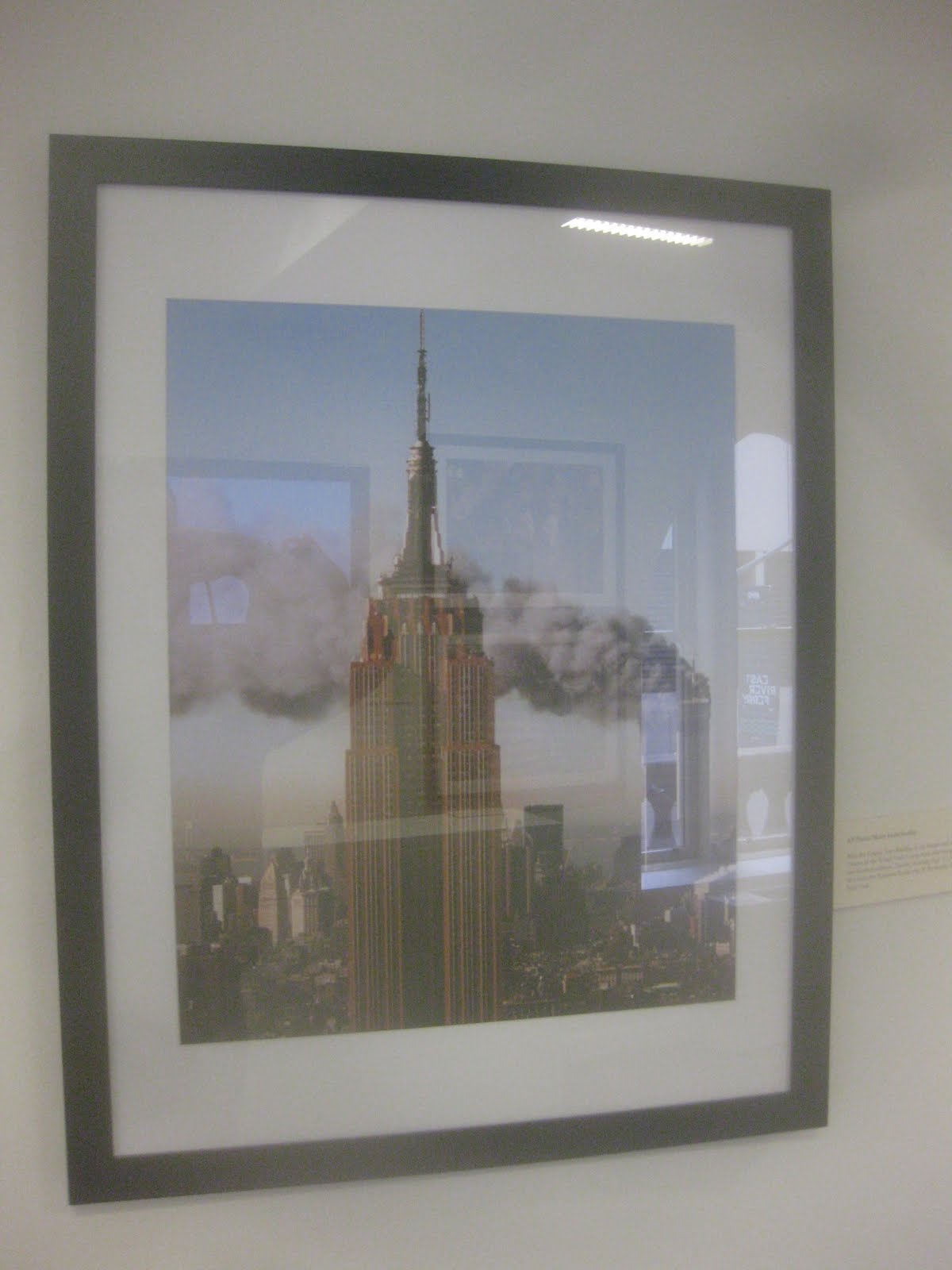
More pics from 9/11.
Policing a Changed City.
A display of objects from the WTC site on 9/11.
A display on NYPD medals.
NYPD uniforms.
The NYPD Medal of Honor.
Badges of the different branches of the NYPD.
A female guards uniform from 1896.
A display of antique handcuffs.
A display of antique guns.
A picture taken from 9/11.
A 1920s slot machine.
19th-century badges and nightstick.
Antique NYPD motorcycles on display.
A description of the NYPD flag.
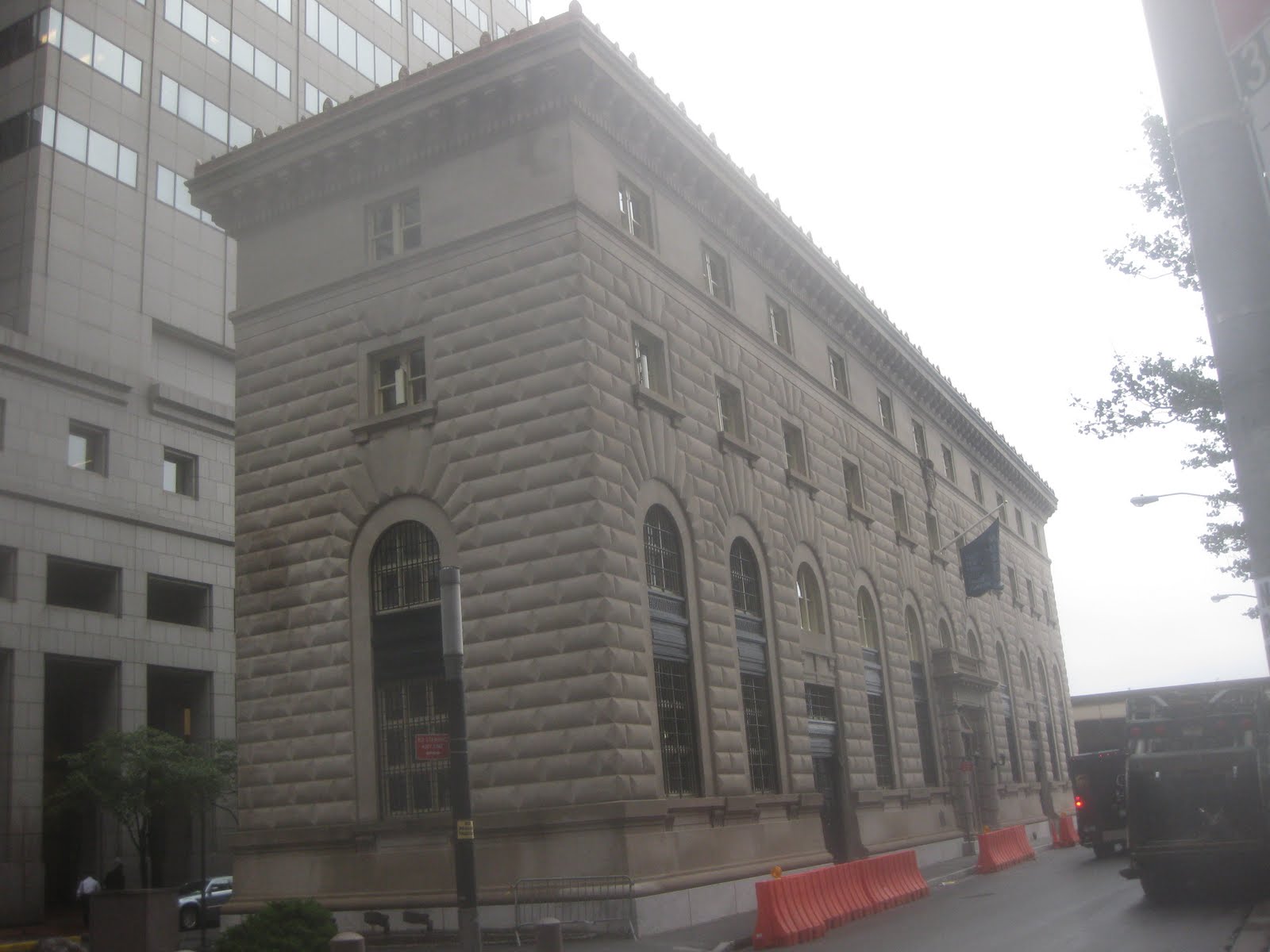
The former 1st Precinct at 100 Old Slip, now the NYPD museum.

A door from a truck that was near the WTC on 9/11.
Babe Ruth and Lou Gehrig at a 1920s NYPD - FDNY game.
An 1860s recruiting poster.
Another display of artifacts from 9/11.
Prominent 1920s gangsters, including Al Capone.
More police uniforms.
The front door of the former 1st Precinct at 100 Old Slip.
This past Sunday marked the tenth anniversary of the September 11th attacks, and I debated whether or not to take a trip down to the World Trade Center site, but ultimately opted to do it.  It was about five o'clock in the evening so all the ceremonies were over.  There wasn't too much to see -- everything was pretty much fenced off.  Even further downtown is the New York City Police Museum in the former 1st Precinct station on Old Slip.  "Old Slip" is so named because it was an inlet for ships coming into the harbor as early as the 1750s, before being filled in and converted to streets over a century later.  As I walked along the hilly, uneven, mismatched streets of the Financial District, I was reminded that this city started down here, and bustling Midtown remained the country for decades.  The Twin Towers stood across the street from the city's oldest building, St. Paul's Chapel, where George Washington attended services, and St. Peter's, the first Catholic Church in the state, is one block north.  Fraunces Tavern, the Bridge Cafe, and the Fulton Ferry Hotel are some of the city's original centers of business. 

My trip to the New York City Police Museum last week took me much further downtown than I normally venture, to Old Slip, the home of the 1st Precinct from 1884 to 1973.  The current landmarked building was built from 1909-1911 on the foundation of the former one by architects Richard and Joseph Howland Hunt, brothers and partners who designed  the Lotus Club on 66th and 5th and the 69th Regiment Armory on 25th and Lexington, among others.  When built, the city's 1st Precinct was considered by many to be the most important police station in the world, and was visited by police chiefs from all around, who considered it a model in modern architecture and looked to copy some of the buildings features for their own new buildings.  It was built in the Italian Renaissance style in tribute to the palazzos of Florence.

The idea for the museum formed in February of 1998, when police commissioner Howard Safir and the Alliance for Downtown New York donated $5 million in return for a new station in the area, but the plan was quickly abandoned by Mayor Giuliani when New Yorkers claimed that a richer area of the city was buying police protection.  A month later, however, a non-profit organization was created to raise money for the project, and the museum was able to open in April 1999 around Bowling Green.  In January 2002, the museum moved into the landmarked building at 100 Old Slip, which had been abandoned since a police corruption scandal in 1977, seeing it as an opportunity to connect with the Department's past.  Renovation of the building was over $4 million, but exhibit space increased by close to 45%.

I came across the narrow building which had carved "POLICE STATION FIRST PRECINCT" in it over the front door and walked inside to find a little old man sitting at the front desk.  He recommended I start on the third floor and work my way down.  Not surprisingly, much of the museum is devoted to 9/11, but it also has an impressive collection of antiques.  A back room on the third floor displayed the badge of every officer killed in the line of duty, since the first in 1853.  A display case had a history of the departments most prestigious medals, including the NYPD Medal of Honor.  On the other side of the floor was a number of discarded pieces from police equipment that was in the area on 9/11 -- a door from a police truck, sirens from a car, guns, hats, belts, etc., and a 60 Minutes special on how Commissioner Ray Kelly is working to turn the NYPD into a military and intelligence force comparable to the CIA and FBI was being shown.  A number of photographs of the damage of that day and people being helped were shown along with a display entitled "Policing a Changed City". 

The second-floor included a replica jail cell and with a female warden's uniform from 1896, when four women were hired due to public demand after a sharp increase in female prisoners.  There was also a display of Brooklyn Police Department badges prior to 1898 when the borough was still an independent city, and a 1920s slot-machine in front of mug shots of prominent gangsters of the time.  The same room also had a large display of nineteenth and early-twentieth century handcuffs and guns.  The first floor showcases examples of the uniform throughout the decades, and has a great collection of old motorcycles.  Naturally, I asked if they were hiring, and naturally they said they weren't.  But at least I got an enriching afternoon of New York City history for only eight bucks!  If you're in town, I highly recommend it!

Monday, August 29, 2011

The Old Neighborhood

My building on 65th and 1st, built in 1898.

St. John Nepumocene Church in 1927, two years after it was built.

St. Catherine's Park in 1902, before it was finished.

The schoolyard of P.S. 183 on East 67th Street between 1st and York.

Side doors of the school are labeled "BOYS" and "GIRLS".

The front door of P.S. 183 on 66th between 1st and York.

St. Catherine of Sienna Church on 68th between 1st and York.

The Dominican Friars were celebrating St. Domonic's Day.

The cornerstone shows St. Catherine's was  built in 1930.

Another shot of the schoolyard of P.S. 183.

The new high-rise that went up next to St. John's just a couple of years ago.

St. John Nepumucene Church on 66th and 1st today.

The sign for Peppermint Park still remains at the door of what is now a Dunkin' Donuts.

St. Catherine's Park on 67th and 1st.

You know how when you're in high school and you go back to your elementary school and it looks like the hallway has shrunk? Everything is much smaller than you remember. The walls are closer together and the water fountains are at your knees. Well, when I moved back into the apartment that I had moved out of when I was a kid a few years back, that's the way I felt about the whole neighborhood. Places that were actually only a block away, I remembered as being about five blocks away.

The church where I was baptized and had my first communion, St. John Nepumucene, or St. John Nepumuk, is on the corner of 1st Avenue and East 66th Street. Founded by Slovakian immigrants, it is served by two Hungarian priests, one old and one young, has a Hungarian flag at the altar and has mass in Slovak every Sunday. When the first big influx of immigrants from Slovakia arrived in the city, there was a big call to form a parish of their own where they could speak their own language. They started meeting at St. Brigid's on 8th Street and Avenue B, and organized their first parish on East 4th Street. The current church was finished in 1925, and it really is a beauty. It's often open during the day and I like to go in an admire the intricately designed stained glass, statues and grotto in the front. Further down the street is P.S. 183, my old school, and around the block is the schoolyard where I spent many an hour. The layout, and the farmers market they have on Saturdays, has remained pretty much unchanged since the eighties.

On 68th between 1st and York is another Catholic church, St. Catherine of Siena, built in 1930. This parish was formed in 1897 mainly for the Irish community, and the current church, run by the Dominican friars, is actually quite massive, with a number of shrines lining the walls. Up the street on 1st Avenue is the park also named for the saint where I spent a great deal of my early childhood. Back then we all called it the "local park", and for years I thought this was it's official name, but as it turns out, it too was named for St. Catherine. When the land was purchased in 1902, the park's design was based on Santa Maria sopra Minerva in Rome, built in 1280, where St. Catherine is buried. The flagpole in the center of the park represents the altar, the play areas on either side are the pews, and the paving pattern of the park resembles that of the floor of the church in Rome.

I found this out from reading a history of St. Catherine's Park I found online, but I think they only describe the original plan. The park has been remodeled at least twice since I moved upstate to Nyack. The plan of my childhood was so full of jagged corners, steep falls and high walls that my father used to joke that whoever designed this park obviously didn't have any kids.

When the park was redone shortly before we moved in 1989, it was widened in the center so that police cars could drive through, in an effort to crack down on the drug dealers that were starting to take the place over. But who wants to take their children to a park that is being patrolled by cops non-stop? Now, with crime drastically decreased in the city, the design is at its most practical, with a playground and swings in the center inhabited by little kids and there parents, flanked by an area with benches inhabited by old ladies and me, and the ball court that hasn't changed much at all.

New York City bloggers are always bemoaning the rapid disappearance of small business in place of large chains, and the old neighborhood has seen it's share of that. A bank in my building used to be a suede store, a dry cleaners was a souvenir shop, and the neighborhood ice cream shop on 66th Street, Peppermint Park, is now a Dunkin' Donuts, but at least the old sign still remains. Not to mention, a giant high rise went up right next to St. John's about two years ago. Despite all this, Goldberger's Pharmacy, also on the ground floor of my building, has remained in place since 1898. Even with a Duane Reade on practically every block, it refuses to budge.

Goldberger's and Wise Pharmacy on 79th and York must have very low rent which allows them to defy the odds and stay in business. They probably have been around since my building and a similar one on 79th and York went up in the 1890s. Built with the vision of providing comfortable living for the working class, the apartments included such luxuries as their own bathrooms, a far cry from the tenements of downtown. Now these buildings are City Landmarks.

All in all, I'm glad to be back in the old neighborhood, and if I can ever catch a break in the midst of this recession, I hope to be here for many years to come.

Tuesday, August 2, 2011

The Lone Star Cafe


Construction of the new branch of Shrafft's began in 1936 after an old brownstone was demolished.
The Lone Star Cafe in 1978.
Another shot of the new building going up in place of the Lone Star.

The new high-rise going up in July 2011.

An interior shot of the new Shrafft's on at 61 5th Avenue, corner of East 13th Street, in 1938.

A shot of the front entrance in 1938.

The Korean Deli that was the building's last occupant in 2005.

The Lone Star Cafe in the '80s.

The 40-foot-long iguana keeping guard at the Lone Star about 1987.

I was walking around in Greenwich Village the other day and came across the new building going up in place of the former Korean deli on 5th Avenue and 13th Street. In 1936 a brownstone was demolished to make way for a new two-story Schrafft's, probably the most popular chain of diners in the city during the '30s, '40s and '50s. A number of photos from the Metropolitan College of New York show what a beautiful place it was when it was first built. A revolving door led to a cocktail bar to the right and a spiral staircase to the second floor on the left.

Critic Lewis Mumford didn't like the place, though. He hated its "screwy" curved front, calling it "the new cliche and it will soon belong in the done to death department." He went on to say that the building is "a pretty sorry mismatch" with "ill-assorted windows" and a "crazy little balcony".

These pictures were taken in 1938, when the place was still new and fashionable. By 1969, it had become the hang out of staff members from Women's Wear Daily, the New School, and loftmen from 14th Street. According to a 1969 New York Magazine article called "The Little Old Lady Restaurants", Schrafft's would fill up with L.O.L.s (which back then didn't mean "Laugh Out Loud"). In an effort to revamp their not-very-hip image, they hired Andy Warhol to do a commercial about the chain. But it was what it was, and ultimately closed a few years later.

In 1976, it became The Lone Star Cafe, the city's most popular country music concert venue. It hosted a number of musical acts, and particularly featured acts from Texas. Roy Orbison, Willie Nelson, Kinky Friedman and Billy Joe Shaver all did regular shows there. The Blues Brothers and James Brown also did shows there, with Brown recording a live album there in 1985. The place was also visited by Texas TV personalities such as Larry King, Dan Rather and Linda Ellerbee. My parents went to see rockabilly musician Robert Gordon there when they were dating.

Over the front entrance was draped the line "Too Much Ain't Enough" from Waylon Jennings' song "Old Five And Dimers Like Me", and the building was famous and infamous for the 40-foot long iguana sculpture on it's roof by Bob "Daddy-O" Wade. The place didn't really fit in with its upscale neighborhood, and local residents fought a hard battle get rid of the sculpture, considering it to be an eyesore. Detractors succeeded for a couple of years and it was removed, but in 1983 it was restored and unveiled in a ceremony presided over by Mayor Ed Koch and then-Texas Governor Mark White. My father said that he wanted to take it, but that it probably wouldn't fit in our apartment.

When the Lone Star closed in 1989, the iguana went into storage on the Hudson River docks across from North Moore Street, but ultimately "disappeared". I assume it was stolen. I don't know how they pulled that one off.

Serving as a gallery for street art for a number of years and then a deli, in 2009 it joined the ranks of historic buildings in the city that have been torn down to be replaced by expensive glass boxes. A ten-story luxury apartment building is currently being built in its place. I had been on that corner plenty of times when I worked near there and never even noticed that small building with a lot of history. I try to notice as much of them as I can these days, because they're disappearing one by one.