|
| St. Paul's Chapel circa 1905 (the pews have since been removed). |
 |
| The hotel in 1932 (note the massive gas tank in the back). |
 |
| The pulpit of St. Paul's Chapel. |
 |
| The gazebo in the back of the Mount Vernon Hotel. |
 |
| The front yard of the Mount Vernon Hotel. |
 |
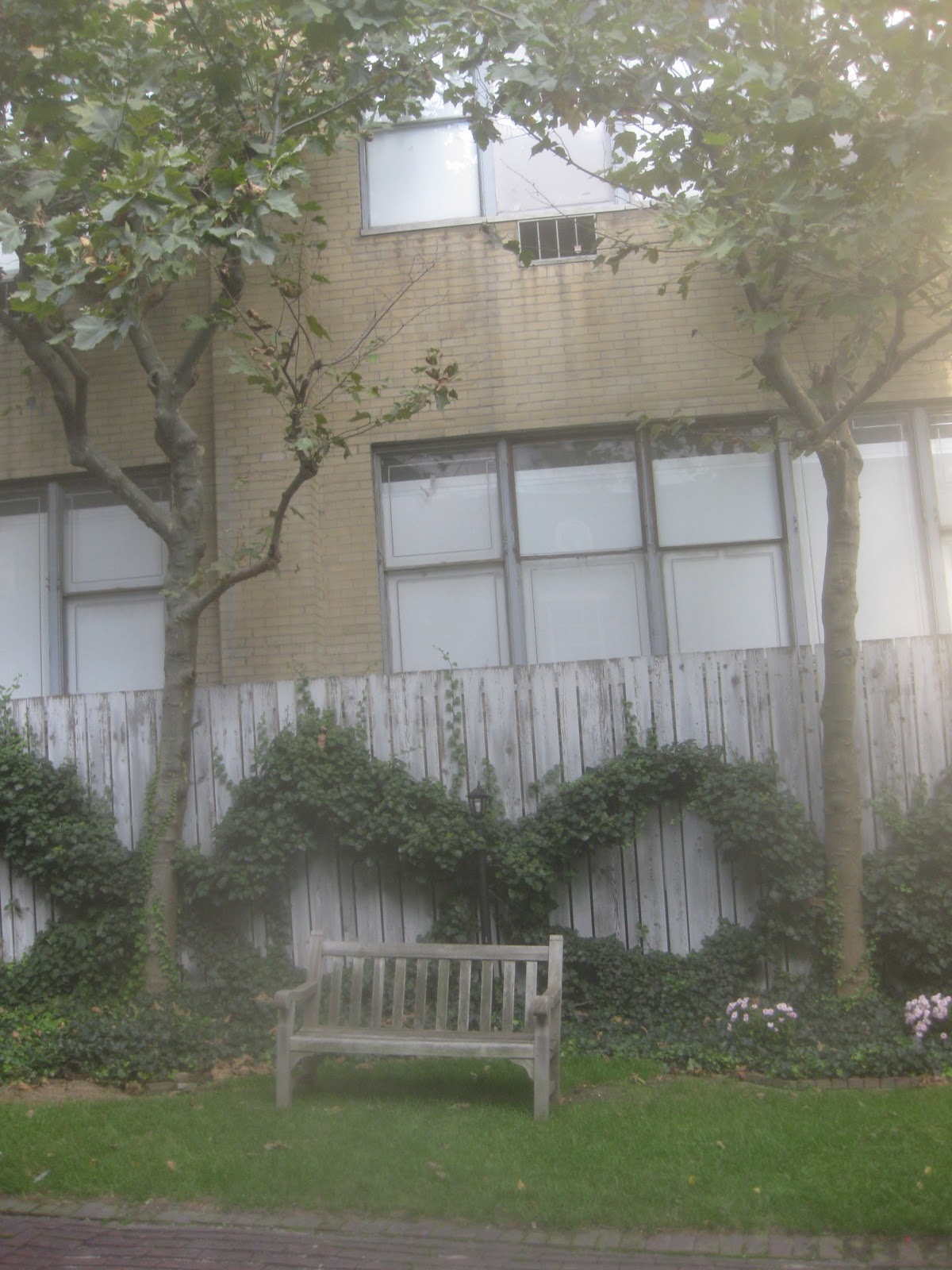
| The back of the hotel. |
 |
| Another shot of the back garden of the Mount Vernon Hotel. |
 |
| A bench and gazebo in the back garden of the hotel. |
 |
| Another sitting area in the back of the hotel. |
 |
| The 1909 Queensboro Bridge towers over the front yard of the hotel. |
 |
| The sign out front of the hotel. |
 |
| The front of the hotel. |
 |
| A small bridge leading from the second floor to a neighboring garden next to the hotel. |
 |
| A fireman's coat from 9/11 on display in St. Paul's Chapel. |
 |
| An 1785 painting of the Governor's seal above his box in the chapel. |
 |
| Chairs in the Governor's box in the chapel. |
 |
| Looking up the main isle of the chapel. |
 |
| One of the first paintings of the Presidential seal, hanging over his box in the chapel. |
 |
| President Washington's chair in the chapel. |
 |
| A painting of St. Paul's in 1799. |
 |
| The Mount Vernon Hotel today. |
 |
| One of the sitting rooms in the hotel. |
 |
| The hotel in 1924, its last year as Con Ed's headquarters (note the large gas tank in back). |
 |
| An aerial view of the hotel from the '40s. |
 |
| The Mount Vernon Hotel Museum and Garden. |
 |
| St. Paul's Chapel circa 1895. |
 |
| St. Paul's graveyard in the early '70s with the Twin Towers being built across the street. |
This past weekend was Open House New York in the big city, the annual event where buildings of note open up their doors to the public free of charge. This year, I took a look around the Mount Vernon Hotel Museum and Garden, at 421 East 61st Street between 1st and York Avenues. Built in 1799, it was originally a carriage house for the summer mansion of Col. William Stephens Smith and his wife Abigail Adams Smith, the daughter of our second President John Adams. The mansion was located where the Bed, Bath & Beyond is now on 1st Avenue between 60th and 61st. The mansion burned to the ground before the couple even got to use it once, and in 1826 the abandoned carriage house was converted into the Mount Vernon Hotel, a "day hotel" for the well-to-do who wanted to get away from the city, which back then ended at 14th Street. The museum guide explained that a "day hotel" in those days was about equivalent to a modern-day country club. The rich would travel up there during the day for recreation, but not sleep there. The house actually only had one small bedroom. The hotel was named for the home of George Washington in Virginia. The first President remained a popular cult figure decades after his death, and it was very common to see his portrait in hotels, taverns, and other public places.
If you get a chance to visit, I highly recommend it. Walking up the stone steps and on the the wrap-around lawn to the front door is like suddenly walking into the country, I found it to be a very strange feeling. The front entrance brought me to the dining room, where a dinner scene from around the 1820s could be found. Turtle soup is being served, with the shell being re-used as main bowl. The door to the left leads to the kitchen, and to the right is a living room with reproductions of old newspapers that listed the wages for different jobs. Unskilled laborers made about $2.50 a month. In total there are eight rooms decorated in an 1820s-style with furniture donated throughout the years. Unfortunately, no one is allowed to take pictures inside, so you'll have to see it for yourself!
On a very interesting note, I learned that after being a private home for a number of years in the late 1800s, the house was bought by the Standard Gas Light Company (today's Con Edison) in 1905 when the area was becoming more industrialized. It remained Con Ed's main headquarters until 1924 when it was purchased by the Colonial Dames of America and turned into a museum by 1939. I saw a number of pictures from the '20s and '30s of the house surrounded by massive gas tanks. Out of gratitude for Con Ed almost completely keeping the house unchanged, all its employees are given free admission to this day.
Since I was on a colonial "high" if you will, I decided to go down to St. Paul's Chapel on Broadway and Fulton Street, one of the oldest buildings in Manhattan, where Washington led a procession to a thanksgiving service here from the old Federal Hall on his inauguration day. The chapel still has a lot of displays devoted to 9/11 and the rescue efforts it took part in. The governor's box on the south side, a sign notes, was used for supplies, while the President's box, directly across, was used as a podiatrist's station. Since many of Washington's men went without proper footwear during the Revolution, the chapel considered it a touching tribute. Above it is one of the oldest paintings of the presidential seal, dating back to 1785, which was probably hanging there during Washington's presidency. Noting that the bird is solid black, a sign read that Benjamin Franklin probably had a lot of influence on the seal's design since he was a leading advocate for making the wild turkey, rather than the bald eagle, the national animal.
When I had come down that afternoon, choir practice was in full swing, so I decided I shouldn't bother them. I took a look around the old graveyard and then headed back uptown. For anyone living in the city, I highly recommend taking advantage of Open House New York each October as an opportunity to learn about some of its most fascinating buildings free of charge.